- California SB 574 (Chapter 858, Statutes of 2026): generative AI duties for attorneys and arbitrators
California Legislature · revised 2026-09-30 · verified 2026-10-05
- Letter No. 112/WKMA.Y/HK2.1/IX/2026: draft judgment-writing guidance and templates for the new Criminal Codes
Mahkamah Agung · revised 2026-09-02 · verified 2026-09-04
- Supreme Court of Japan generative-AI demonstration for civil trials (FY2027 budget request)
Supreme Court of Japan · revised 2026-08-28 · verified 2026-09-04
- Connecticut Judicial Branch, Committee on Artificial Intelligence in the Connecticut Legal System: Final Report
Connecticut Judicial Branch · revised 2026-08-10 · verified 2026-09-04
- Regulation (EU) 2024/1689 (Artificial Intelligence Act)
EU · revised 2026-07-27 · verified 2026-10-07
- Regulation (EU) 2026/1744 (Digital Omnibus on AI)
EU · revised 2026-07-24 · verified 2026-10-05
- KI-Marktüberwachungs- und Innovationsförderungsgesetz (KI-MIG)
Germany · revised 2026-07-22 · verified 2026-09-16
- 2026 Judiciary Conference Resolutions, Section 5 — Information Communication Technology, Digitisation and Artificial Intelligence
SA Judiciary Conference · revised 2026-07-16 · verified 2026-09-04
- Judiciary Information and Communication Technology Policy, 2083 (2026)
Supreme Court of Nepal · revised 2026-06-24 · verified 2026-09-04
- In re Amendments to Article V, Rule 1.1 of the Supreme Court Rules (Professional Conduct) and Adoption of Interim Generative AI Guidelines
RI Supreme Court · revised 2026-06-17 · verified 2026-09-04
- Protocol for the use of artificial intelligence in the Judicial Function (Ethics Committee)
Comite de Etica FJ · revised 2026-06-16 · verified 2026-09-04
- Draft Regulations for Use of Artificial Intelligence in Courts, 2026
Supreme Court of India · revised 2026-06-16 · verified 2026-09-05
- Ohio Ethics Guide: Artificial Intelligence for Lawyers and Judicial Officers
Ohio Board of Professional Conduct · revised 2026-06-02 · verified 2026-09-04
- Draft Commission Guidelines on the classification of high-risk AI systems (Article 6)
European Commission · revised 2026-05-19 · verified 2026-09-16
- Judicial Guidelines on the Use of Artificial Intelligence
Supreme Court of Victoria · revised 2026-05-14 · verified 2026-10-05
- National Guidelines for the Use of Artificial Intelligence in Judicial Institutions
NJPMC · revised 2026-04-29 · verified 2026-09-04
- Reference Guidelines for the Use of Artificial Intelligence Systems by the Judicial Yuan and Subordinate Agencies
Judicial Yuan · revised 2026-04-22 · verified 2026-09-04
- CSM Recommendations on the use of artificial intelligence in judicial activity (Recomendacoes no uso de IA)
CSM · revised 2026-04-08 · verified 2026-09-04
- Directive prohibiting judicial officers from using AI tools for judgments and legal research
Punjab and Haryana High Court · revised 2026-04-06 · verified 2026-09-04
- Policy on the Use of Artificial Intelligence in Judicial and Court Administration
Gujarat High Court · revised 2026-04-01 · verified 2026-09-04
- Draft Policy on Artificial Intelligence for the Judiciary in South Africa
OCJ · revised 2026-04-01 · verified 2026-09-04
- Ethical Code for the Use of Artificial Intelligence Tools in the Judicial Authority (Courts Administration Procedure No. 01-26)
Israel Courts Administration · revised 2026-03-26 · verified 2026-09-04
- Resolução CNJ nº 615/2025: Use of Artificial Intelligence in the Judiciary
CNJ · revised 2026-03-25 · verified 2026-10-05
- AI Guidebook for Judges
Korea National Court Administration · revised 2026-02-24 · verified 2026-09-04
- A.M. No. 25-11-28-SC: Governance Framework on the Use of Human-Centered Augmented Intelligence in the Judiciary
Supreme Court of the Philippines · revised 2026-02-18 · verified 2026-09-04
- Indiana Supreme Court Office of Judicial Administration: trial-court AI policy toolkit
Indiana Supreme Court OJA · revised 2026-02-17 · verified 2026-09-04
- CGPJ Instruction 2/2026 on the use of AI systems in judicial activity (Instruccion 2/2026)
CGPJ · revised 2026-01-30 · verified 2026-09-04
- Artificial Intelligence Ethics Charter
CJEU · revised 2026-01-26 · verified 2026-09-04
- Arizona Code of Judicial Conduct Rule 2.5, Comment 1: judicial technology competence
Arizona Supreme Court · revised 2026-01-01 · verified 2026-09-04
- Guidelines on the use of generative AI by courts and tribunals (CEPEJ(2025)18Final)
CEPEJ · revised 2025-12-19 · verified 2026-09-03
- Hawaii Supreme Court Committee on Artificial Intelligence and the Courts: Final Report (SCMF-24-0000305)
Hawaii Supreme Court · revised 2025-12-16 · verified 2026-09-04
- Charte d'utilisation de l'intelligence artificielle au sein de la juridiction administrative
Conseil d'État · revised 2025-12-11 · verified 2026-09-04
- UNESCO Guidelines for the use of AI systems in courts and tribunals
UNESCO · revised 2025-12-03 · verified 2026-09-04
- Massachusetts Supreme Judicial Court: Interim Guidelines for Use of Generative AI
Massachusetts SJC · revised 2025-12-01 · verified 2026-09-04
- Acta 244-2025: Judicial Ethics Code (article 17 on responsible use of technology and AI)
Corte Suprema · revised 2025-11-19 · verified 2026-09-04
- A.M. No. 25-04-04-SC: The 2025 Code of Judicial Conduct and Accountability
Supreme Court of the Philippines · revised 2025-11-11 · verified 2026-09-04
- Artificial Intelligence (AI): Judicial Guidance
UK Judiciary · revised 2025-10-31 · verified 2026-09-21
- A.M. No. 25-06-11-SC: The 2025 Code of Conduct and Accountability for Court Officials and Personnel
Supreme Court of the Philippines · revised 2025-10-28 · verified 2026-09-04
- Utah Judicial Council Interim Rules on the Use of Generative AI
Utah Judicial Council · revised 2025-10-27 · verified 2026-09-04
- Acordada 15/2024 and October 2025 extension: Protocol of Good Practice for Generative AI in the Judiciary of Rio Negro
STJ Rio Negro · revised 2025-10-01 · verified 2026-10-07
- Louisiana Supreme Court Technology Commission: Generative Artificial Intelligence Guidelines
Louisiana Technology Commission · revised 2025-10-01 · verified 2026-09-04
- Interim Principles and Guidelines on the Court's Use of Artificial Intelligence
Federal Court of Canada · revised 2025-09-29 · verified 2026-09-22
- Law 23 September 2025 no. 132 on artificial intelligence (Legge 132/2025)
Parliament (IT) · revised 2025-09-25 · verified 2026-09-04
- Idaho Office of Administrative Hearings: Guidelines for Administrative Law Judges Regarding the Use of Artificial Intelligence
Idaho OAH · revised 2025-09-24 · verified 2026-09-04
- Cadre de gouvernance en matière d'intelligence artificielle [Artificial Intelligence Governance Framework]
Quebec Superior Court · revised 2025-09-01 · verified 2026-09-04
- Federal collegiate court criteria on the use of artificial intelligence in judicial decision-making
Mexican federal collegiate court · revised 2025-08-22 · verified 2026-09-04
- Draft Judiciary Artificial Intelligence Policy and draft Practice Directions on AI use in courts
Judiciary of Kenya · revised 2025-08-11 · verified 2026-09-04
- Policy Memorandum 25-40: Use of Generative Artificial Intelligence in EOIR Proceedings
DOJ EOIR · revised 2025-08-08 · verified 2026-09-04
- L'IA au service de la justice : stratégie et solutions opérationnelles
Ministère de la Justice · revised 2025-08-01 · verified 2026-09-04
- Interim guidance on the use of artificial intelligence in the federal judiciary
AO of the US Courts · revised 2025-07-31 · verified 2026-09-04
- Policy Regarding Use of Artificial Intelligence Tools in District Judiciary
Kerala High Court · revised 2025-07-19 · verified 2026-09-16
- Judicial Council of Georgia Ad Hoc Committee on Artificial Intelligence and the Courts: Report
Judicial Council of Georgia · revised 2025-07-03 · verified 2026-09-04
- Arkansas Supreme Court Administrative Order No. 25: Artificial Intelligence
Arkansas Supreme Court · revised 2025-06-05 · verified 2026-09-04
- Lov om supplerende bestemmelser til forordningen om kunstig intelligens (LOV nr 467 af 14/05/2025)
Denmark · revised 2025-05-14 · verified 2026-09-04
- Acordada 31/2025: Judicial Innovation Laboratory and Protocol for the use of AI in the Judiciary of Jujuy
STJ Jujuy · revised 2025-04-11 · verified 2026-10-07
- Ishfaq Ahmed v Mushtaq Ahmed, 2025 SCP 112 (PLD 2025 SC 582)
Supreme Court of Pakistan · revised 2025-04-08 · verified 2026-09-04
- Circular No. 25: Good-practice guide for the use of generative AI in the Judiciary of Santa Fe
CSJ Santa Fe · revised 2025-04-04 · verified 2026-10-07
- Artificial Intelligence practice direction: Consultation note
Supreme Court of WA · revised 2025-03-03 · verified 2026-09-04
- Guidelines on the Use of Artificial Intelligence in the Judiciary (Judicial AI Research Group)
Korea Judicial AI Research Group · revised 2025-02-01 · verified 2026-09-04
- Egypt National Artificial Intelligence Strategy, Second Edition (2025-2030)
Egypt NCAI · revised 2025-01-16 · verified 2026-09-04
- Acuerdo PCSJA24-12243: Guidelines for the respectful, responsible, safe and ethical use of AI in the Judicial Branch
CSJ · revised 2024-12-16 · verified 2026-09-04
- Guidelines for New South Wales Judges in respect of use of Generative AI
NSW Chief Justice · revised 2024-11-21 · verified 2026-10-07
- Arizona Steering Committee on AI and the Courts: Generative AI — Ethical Best Practices for Lawyers and Judges
Arizona AI Steering Committee · revised 2024-11-14 · verified 2026-09-04
- Illinois 22nd Judicial Circuit (McHenry County) Administrative Order 2024-23: Artificial Intelligence Policy and Plan
IL 22nd Judicial Circuit · revised 2024-10-01 · verified 2026-09-04
- Guidelines for the Use of Artificial Intelligence in Canadian Courts
CJC · revised 2024-09-01 · verified 2026-09-04
- Sentencia T-323 de 2024: due process and judges' use of generative AI (ChatGPT)
Corte Constitucional · revised 2024-08-02 · verified 2026-09-04
- Guidelines on the Use of Generative AI for Judges, Judicial Officers and Support Staff
Hong Kong Judiciary · revised 2024-07-01 · verified 2026-10-05
- Guidelines for Judges: The Use of Generative Artificial Intelligence
Judicial Council of Ireland · revised 2024-06-01 · verified 2026-10-05
- The use of generative AI: guidelines for judicial officers
Queensland Courts · revised 2024-05-01 · verified 2026-10-07
- Information note on the use of generative AI by judicial professionals
CEPEJ · revised 2024-02-01 · verified 2026-09-03
- Louisiana Supreme Court letter to the Louisiana State Bar Association on the emergence of artificial intelligence
Louisiana Supreme Court · revised 2024-01-22 · verified 2026-09-04
- Guidelines for use of generative artificial intelligence in Courts and Tribunals
Courts of New Zealand · revised 2023-12-07 · verified 2026-09-21
- CCJE Opinion No. 26 (2023): Moving forward - the use of assistive technology in the judiciary
CCJE · revised 2023-12-01 · verified 2026-09-04
- State Bar of Michigan Judicial Ethics Opinion JI-155: judicial use of artificial intelligence
State Bar of Michigan · revised 2023-10-27 · verified 2026-09-04
- JIC Advisory Opinion 2023-22 (judicial use of artificial intelligence)
WV Judicial Investigation Commission · revised 2023-10-13 · verified 2026-09-04
- Judicial Yuan statement on generative-AI judgment drafting for criminal cases
Judicial Yuan · revised 2023-08-27 · verified 2026-09-04
- UNESCO Global Toolkit on AI and the Rule of Law for the Judiciary
UNESCO · revised 2023-01-01 · verified 2026-09-04
- Opinions on Regulating and Strengthening the Applications of Artificial Intelligence in the Judicial Field
SPC · revised 2022-12-08 · verified 2026-09-04
- Resolucao CNJ no 332/2020: Ethics, Transparency and Governance in the Production and Use of AI in the Judiciary
CNJ · revised 2020-08-21 · verified 2026-09-04
- European Ethical Charter on the use of artificial intelligence in judicial systems and their environment
CEPEJ · revised 2018-12-04 · verified 2026-09-04
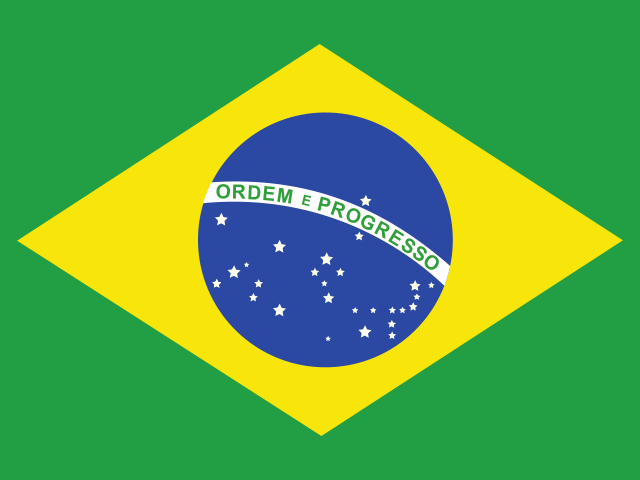 Brazil
 China
China Colombia
 India
India Indonesia
 Israel
 Italy
Italy Nepal
Nepal Philippines
 Spain
Spain Argentina
 Australia
 Canada
 Chile
Chile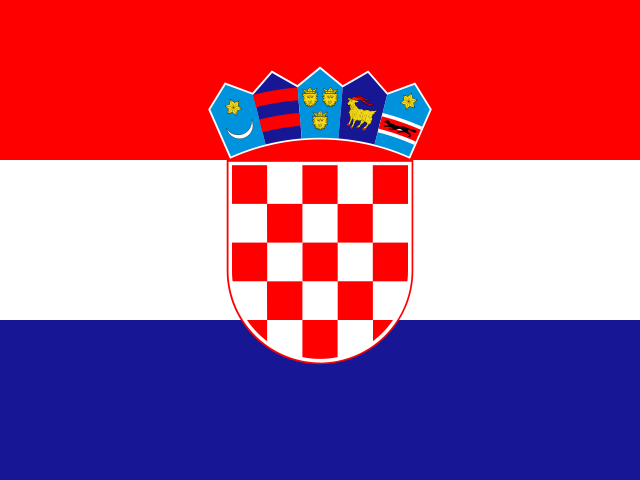 Croatia
 European Union
 France
 Hong Kong SAR
 International bodies
 Ireland
 Malaysia
 Netherlands
 New Zealand
 Pakistan
 Portugal
 Rwanda
 South Korea
 Sweden
 Taiwan
 United Kingdom
 United States
 Vietnam
 Ecuador
 Kenya
Kenya Morocco
 Norway
 South Africa
 Ukraine
 Mexico
 Afghanistan
 Albania
 Algeria
 Armenia
 Azerbaijan
 Bahrain
 Bangladesh
 Belarus
 Bolivia
 Bosnia and Herzegovina
 Botswana
 Brunei
 Bulgaria
 Cambodia
 Cameroon
 Costa Rica
 Côte d'Ivoire
 Cuba
Cuba Dominican Republic
 Egypt
Egypt El Salvador
 Estonia
 Ethiopia
 Georgia
 Ghana
Ghana Greece
 Guatemala
 Honduras
 Iceland
 Iran
Iran Iraq
Iraq Jamaica
 Japan
Japan Jordan
 Kazakhstan
 Kuwait
 Kyrgyzstan
 Laos
Laos Latvia
 Lebanon
 Lithuania
 Macao
Macao Malta
Malta Mauritius
 Moldova
 Mongolia
 Montenegro
 Mozambique
 Myanmar
 Namibia
 Nicaragua
 Nigeria
 North Macedonia
 Oman
Oman Panama
 Paraguay
 Peru
Peru Poland
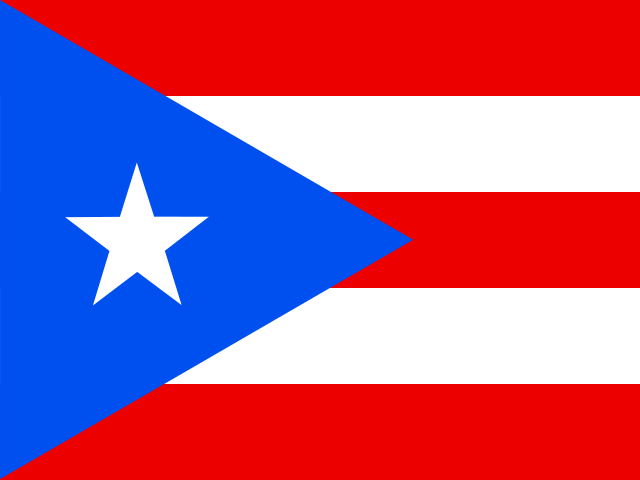 Puerto Rico
 Qatar
Qatar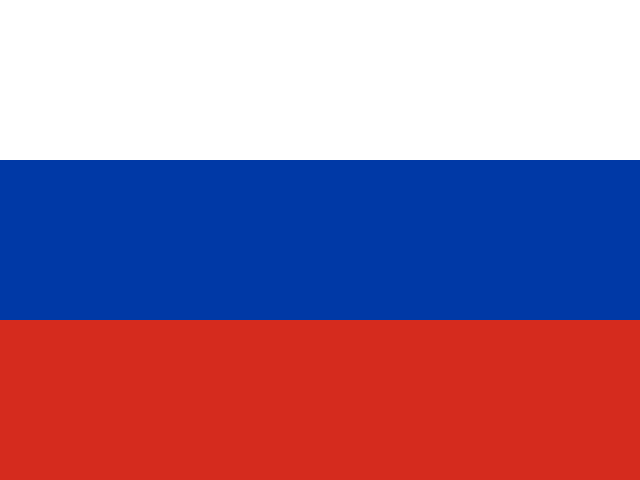 Russia
 Saudi Arabia
 Senegal
 Serbia
 Slovenia
 Sri Lanka
 Tanzania
 Trinidad and Tobago
 Tunisia
 Türkiye
 Uganda
 United Arab Emirates
 Uruguay
 Uzbekistan
 Venezuela
 Zambia
 Zimbabwe
 Austria
 Belgium
 Cyprus
 Czechia
 Denmark
 Finland
 Germany
 Hungary
 Luxembourg
 Romania
 Singapore
 Slovakia
 Switzerland
 Thailand